By 2026, a website that merely "adjusts" to screen sizes is already obsolete in Singapore's hyper-competitive market. You've likely felt the frustration of watching potential leads bounce because your mobile site felt clunky or took seconds too long to load. It's exhausting to maintain a professional brand image when your layout breaks on a tablet or fails to meet Google's strict mobile-first indexing standards. You know that in a mobile-heavy environment, every millisecond and every pixel matters for your bottom line.
This guide shows you how bespoke responsive web design Singapore strategies can transform your site from a static page into a high-converting, future-proofed asset. We'll explore how shifting from generic templates to custom-built architecture ensures a seamless user experience and secures your digital presence for years to come. You'll discover the technical precision needed to drive conversions while keeping your brand consistent across every device. We're moving beyond simple screen resizing to create AI-ready foundations that prioritize user intent and speed.
Key Takeaways
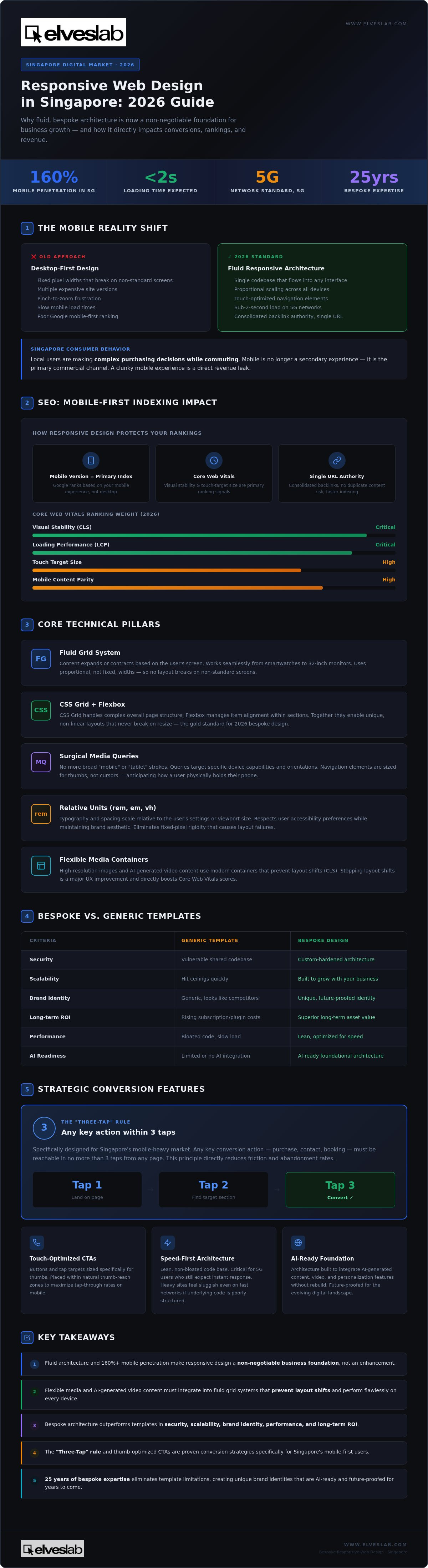
- Understand why fluid architecture and mobile-only consumer behavior make responsive web design Singapore a non-negotiable foundation for business growth in 2026.
- Learn how to integrate flexible media and AI-generated video content into a fluid grid system that performs flawlessly across every digital interface.
- Discover why bespoke digital architecture outperforms generic templates by offering superior security, scalability, and long-term return on investment.
- Master strategic conversion features like the "Three-Tap" rule and optimized call-to-actions specifically designed for the mobile-heavy Singaporean market.
- See how 25 years of bespoke expertise can help you eliminate template limitations and build a unique brand identity that is ready for the future.
What is Responsive Web Design and Why is it Critical in 2026?
Modern responsive web design Singapore has evolved from simple grid adjustments into a fluid digital architecture. It's no longer just about making a site "look okay" on a phone. We define it as a single codebase that intelligently flows into any interface, from foldable smartphones to ultra-wide monitors. While adaptive design relies on several fixed layouts that often break on non-standard screens, a truly responsive site uses proportional scaling. This ensures your brand remains consistent and professional without the need for multiple, expensive site versions.
Singapore’s Digital Landscape in 2026
Mobile penetration in Singapore now exceeds 160%, meaning the "mobile-first" era has transitioned into a "mobile-only" reality for the vast majority of consumers. Local users aren't just browsing; they're making complex purchasing decisions while commuting or during short breaks. They expect sub-two-second loading times on 5G networks. If your site forces a user to pinch and zoom, they'll leave before your content even renders. Sticking to a desktop-first approach isn't just a mistake; it's a significant business liability that alienates your most active customers.
The SEO Connection: Mobile-First Indexing
Google's search algorithms have fully committed to mobile-first indexing. This means the search engine primarily uses the mobile version of your content to determine your rankings. If your mobile experience is clunky or lacks parity with your desktop content, your visibility will tank. Core Web Vitals now place immense weight on how quickly and smoothly your site performs on a smartphone. Factors like visual stability and touch-target size are now primary ranking signals that can make or break your online presence.
Responsive web design in 2026 acts as the essential technical bridge for SEO success by ensuring your content remains accessible, fast, and stable across every possible search entry point. By maintaining a single URL for all devices, you consolidate your backlink authority and make it easier for Google's bots to crawl your structure. This unified approach eliminates the risk of duplicate content issues and ensures that your latest updates are indexed immediately across the entire digital landscape.
The Core Technical Pillars of Modern Responsive Architecture
Building a site that works everywhere requires a shift from fixed pixels to fluid architecture. In 2026, we don't just set widths; we define behaviors. Fluid grids allow your content to expand or contract based on the user's screen, ensuring that a bespoke design looks just as intentional on a smart watch as it does on a 32-inch monitor. This flexibility extends to media. Scaling high-resolution images and AI-generated video content requires modern containers that prevent layout shifts, which are a major turn-off for users.
Media queries have also become more surgical. Instead of broad strokes for "mobile" or "tablet," we target specific device capabilities and orientations. This precision allows for a touch-friendly UI where navigation elements are sized for thumbs, not just precise cursors. When you invest in professional responsive web design Singapore, you're ensuring that every interaction feels natural and effortless. It's about anticipating how a user holds their phone and placing key elements within easy reach.
Advanced Layout Engines: Flexbox and CSS Grid
Modern developers have moved past the limitations of floats and basic percentages. CSS Grid is now the standard for creating complex, bespoke layouts that remain stable across different browsers. While Grid handles the overall page structure, Flexbox manages the alignment of items within those sections. This combination provides a level of control that was impossible a few years ago. It allows us to create unique, non-linear designs that don't break when the screen size changes.
Consistency is maintained through relative units like rem, em, and vh. These units allow typography and spacing to scale in relation to the user's settings or viewport size. It's about creating a system that respects the user's preferences while maintaining your brand’s aesthetic integrity. If you're looking for a partner to build these complex systems, our team provides custom web design solutions that prioritize technical excellence and scalability.
Optimizing Performance for Singapore's 5G Users
Speed remains a critical factor despite Singapore's widespread 5G coverage. A heavy site will still feel sluggish if the underlying code is bloated. We focus on minifying code to reduce the Time to First Byte (TTFB), ensuring that your server responds instantly to every request. Performance isn't just a technical metric; it's a core part of the user experience that keeps visitors from bouncing.
Performance optimization includes several key strategies:
- Lazy loading for high-resolution bespoke imagery to save bandwidth and speed up initial rendering.
- Integrating AI-optimized assets that maintain visual quality at significantly smaller file sizes.
- Implementing modern image formats like WebP or AVIF for faster loading across all browser types.
These technical steps ensure your site isn't just responsive, but also incredibly fast. By reducing the weight of your assets, you provide a seamless experience that satisfies both your users and search engine crawlers.
Bespoke Responsive Design vs. Generic Templates: Choosing for ROI
A low-cost template often feels like a strategic shortcut for businesses entering the digital space. On the surface, these themes look professional; however, they hide a mountain of technical debt that eventually drains your budget. In the world of responsive web design Singapore, a "one size fits all" approach usually means your site is carrying extra weight it doesn't need. These templates are built to serve thousands of different users, so they include massive libraries of code for features you'll never use. This bloat directly impacts your loading speed and, consequently, your conversion rates.
Bespoke architecture offers a level of security and scalability that generic options simply can't match. When you use a popular template, you're following a public blueprint that hackers know how to exploit. Custom code is a unique structure; it's a locked door without a widely distributed key. This tailored approach also allows your digital presence to grow alongside your business. You won't have to scrap your entire site just to add a new functional module three years down the line. We treat code as a craft, ensuring every line serves a specific purpose for your unique goals.
Performance and SEO: The Custom Advantage
Search engines don't just look at what's on the page; they look at how the page is built. Custom-coded sites consistently outperform templates because they eliminate "code bloat." By loading only the essential scripts and styles, your site achieves the lightning-fast response times that Google's 2026 algorithms demand. This technical cleanliness is a core pillar of custom web design Singapore strategies. When your architecture is lean, your SEO efforts yield better results, as bots can crawl and index your content without getting stuck in a maze of redundant third-party plugins.
Financial Support: Singapore Digital Grants
Investing in bespoke infrastructure is more accessible than many SMEs realize. The Productivity Solutions Grant (PSG) remains a vital resource for local businesses looking to upgrade their digital capabilities. This grant is designed to support digital transformation, helping you move from a basic web presence to a high-performing business tool. By leveraging these grants, you can offset the initial costs of custom development while securing a much higher long-term ROI.
Think of bespoke design as a digital asset rather than a recurring expense. While a template might save you money today, the cost of lost leads, security patches, and future redesigns adds up quickly. A custom-built site is an investment in your brand's future. It provides a stable, professional foundation that represents your business accurately across the entire Singaporean market. Choosing quality from the start ensures you aren't just participating in the digital economy, but actively leading it.
Strategic Features for High-Converting Singaporean Websites
Responsive E-commerce: Driving Sales on the Go
High-intent shoppers often browse on the move, but they'll abandon their carts if the checkout process feels clunky. Optimizing your store means creating a frictionless path from the product gallery to the final payment. Product images must scale perfectly without losing detail, allowing users to inspect every feature on a small screen. If you're building a digital storefront, integrating these features is critical for e-commerce development Singapore success. We focus on reducing the number of form fields and offering mobile-friendly payment options to ensure you don't lose sales at the last second. A seamless mobile checkout can significantly lower abandonment rates for Singaporean businesses.
AI Content Integration in 2026
Static images are no longer enough to hold attention in a crowded market. Integrating AI-generated video content into your site provides a dynamic way to explain products or share brand stories effectively. These aren't just standard videos; they're served through responsive players that detect a user's bandwidth and device type automatically. This ensures that a high-quality video won't stall on a slower connection or look pixelated on a high-resolution screen. The future involves interactive, AI-driven elements that adapt to user behavior in real-time. This level of personalization keeps users engaged longer and provides a competitive edge that generic sites simply can't offer. We use these tools to turn passive visitors into active participants in your brand story.
If you're ready to move beyond basic layouts and build a site that actually converts, our team is here to help. Start your bespoke web design journey with our experts today and future-proof your digital presence.
Elevating Your Brand with Elves Lab’s Custom Responsive Solutions
Since 2000, our team has helped shape the digital presence of countless local enterprises. We aren't just another agency; we're creative mastermen who believe your brand deserves a unique identity that a $50 template simply can't provide. Our "No-Template" philosophy is the cornerstone of our work. Every responsive web design Singapore project we undertake is built from the ground up. This ensures your site isn't just a copy of a competitor's layout, but a high-performance asset tailored to your specific business logic. We combine technical precision with a friendly, supportive approach that makes the complex world of web development feel accessible and safe.
A great website needs a solid foundation to thrive in the 2026 landscape. We provide a complete digital ecosystem that includes secure, high-speed web hosting and custom software development. By building our own CMS solutions, we eliminate the security risks and performance bottlenecks associated with bloated third-party plugins. Our partnership doesn't end when your site goes live. We integrate SEO and social media marketing into our strategy from the very beginning. This holistic approach ensures your bespoke architecture is visible to the right audience and ready to scale as your business grows.
Our Bespoke Development Process
Our methodology is structured and logical, reflecting our 25 years of industry experience. We start with a deep-dive consultation to understand your operational needs and customer pain points. Once we have a clear vision, we move into the design and prototyping phase. Here, we craft a unique responsive UI that prioritizes user flow and brand aesthetic. The final stage is development, where our engineers build your high-performance, custom CMS website. Every line of code is written to ensure maximum speed and stability across all devices.
Why Singapore Businesses Trust Elves Lab
Local SMEs and larger enterprises trust us because we have a proven track record of delivering results that last. We don't just follow trends; we use future-proofed technology stacks that keep your site relevant for years. Our team provides proactive support, suggesting improvements before problems even arise. We take the technical burden off your shoulders so you can focus on running your business. If you're ready to move beyond generic digital solutions and build something truly exceptional, it's time to talk to a team that understands the local market inside and out.
Your journey toward a superior digital presence starts with a simple conversation. Our experts are ready to help you navigate the transition to a bespoke, high-converting platform. Book a consultation with our experts today and discover how we can future-proof your Singaporean business for the 2026 digital landscape.
Securing Your Digital Future with Bespoke Architecture
Transitioning to a high-performing digital presence requires moving beyond the limitations of generic templates. By focusing on fluid architecture and AI-ready foundations, you ensure your business remains competitive in Singapore's mobile-heavy landscape. Choosing a custom-built approach isn't just about aesthetics; it's about building a secure, scalable asset that Google rewards and users trust. Professional responsive web design Singapore is the foundation of this long-term success.
With over 25 years of expertise since 2000, Elves Lab specializes in turning these complex technical requirements into seamless user experiences. We combine custom CMS development with integrated SEO and AI video services to keep your brand at the forefront of the 2026 market. You don't have to handle these digital shifts alone. Our team acts as your dedicated partner, taking the technical weight off your shoulders while you focus on growth.
Transform your digital presence with Elves Lab's bespoke web design solutions. Let's build something extraordinary together.
Frequently Asked Questions
What is the difference between responsive and mobile-friendly web design?
Mobile-friendly design ensures a site is functional on a smartphone, often by using a simplified version of the desktop layout. Responsive design is more advanced. It uses a single, fluid codebase that intelligently reshapes itself to fit any screen size or orientation. This provides a consistent, professional experience across desktops, tablets, and mobile devices without needing separate site versions.
How much does responsive web design cost in Singapore for 2026?
The investment for a responsive project depends on the complexity of your business logic and the level of customization required. Bespoke solutions typically involve a higher initial cost than basic templates because they're built from the ground up for performance and security. We recommend a consultation to discuss your specific needs and provide a tailored quote that reflects your long-term goals.
Can my existing website be converted into a responsive design?
It's technically possible to retro-fit responsiveness into an older site, but it often requires significant changes to the underlying code. In many cases, it's more cost-effective to rebuild the site using a modern, bespoke architecture. A fresh start ensures you eliminate technical debt and benefit from the latest security standards and performance optimizations that older platforms simply don't support.
Will a responsive website improve my Google ranking in Singapore?
Yes, responsive web design Singapore is essential for SEO success because Google primarily uses mobile-first indexing to rank content. A responsive site improves your Core Web Vitals by providing better visual stability and faster loading times on mobile devices. These factors signal to Google that your site offers a high-quality user experience, which can lead to higher visibility in local search results.
Do I need a separate mobile app if my website is responsive?
Most businesses don't need a separate app if their website is built with a responsive, high-performance architecture. A responsive site handles everything from e-commerce to lead generation across all devices seamlessly. Apps are usually reserved for specific functions that require native hardware access, like heavy push notifications or complex offline tools. For general business growth, a unified website is much easier to manage.
How long does it take to develop a bespoke responsive website?
Development timelines vary based on the scope of the project and the unique features you need. A bespoke project usually takes several weeks to a few months to complete. This timeframe includes the initial consultation, prototyping, and the careful development of a custom CMS. We prioritize quality and technical precision to ensure your site is ready to perform from the moment it launches.
Are there government grants available for responsive web design in Singapore?
Local SMEs can often tap into the Productivity Solutions Grant (PSG) to support their digital transformation efforts. This grant helps offset the costs of adopting high-quality digital solutions, including custom web development. You should check the GoBusiness portal for the latest eligibility criteria and application steps. These grants make it much easier for businesses to invest in professional, future-proofed digital infrastructure.
How does responsive design affect website loading speed?
Bespoke responsive web design Singapore actually improves speed by removing the redundant code found in generic templates. We use modern techniques like lazy loading and AI-optimized asset delivery to ensure your site responds instantly. On Singapore's high-speed 5G networks, a lean, responsive site provides the frictionless experience that keeps visitors from bouncing and encourages them to convert into loyal customers.
Disclaimer
AI-Generated Content Disclaimer
The articles, blog posts, and informational content published on this website may be generated or assisted by artificial intelligence (AI) tools for search engine optimisation (SEO), content discovery, and informational purposes.
While reasonable efforts are made to ensure the content is relevant and useful, the information provided may not always be accurate, complete, current, or applicable to your specific circumstances. The views, opinions, statements, recommendations, or interpretations expressed in these articles are generated based on publicly available information and do not necessarily reflect the views, opinions, positions, policies, or professional advice of our company, its management, employees, partners, or affiliates.
The content should not be construed as legal, financial, medical, technical, professional, or other specialised advice. Readers are encouraged to independently verify any information and seek professional consultation where appropriate before making decisions based on the content provided.
Our company shall not be held liable for any loss, damage, claim, or consequence arising directly or indirectly from the use of, reliance upon, or interpretation of any AI-generated content published on this website.
By accessing and using this website, you acknowledge and accept that certain content may be generated or assisted by AI technologies and is provided on an "as is" basis for informational and SEO purposes only.