Introduction
One of the most common assumptions we hear from business owners is, "If I already have a company website, why do I need a dedicated Landing Page Design?" After working with businesses across Singapore for more than 26 years, we've discovered that many companies invest thousands of dollars into Google Ads, Facebook advertising, SEO campaigns and email marketing, yet direct every visitor to a generic homepage that was never designed to convert. In many cases, the problem isn't a lack of website traffic—it's that visitors aren't being guided towards a clear action.
During our 26 years of designing websites and campaign pages for Singapore businesses, we've learnt that successful digital marketing depends on more than attracting traffic. The experience visitors encounter after clicking an advertisement, search result or promotional link plays an equally important role. A well-planned campaign landing page connects the promise made in your marketing with a focused destination built around that visitor's expectations. By aligning the headline, content, trust signals and call-to-action with a specific audience, businesses can create a clearer journey from initial interest to enquiry.
At Elves Lab, we've spent more than 26 years helping businesses strengthen their digital presence through Website Design Singapore, Web Design Singapore, and Website Development Singapore. Every successful Landing Page Design begins with a strong website foundation, which is why our Website Design Services are planned around business objectives, user experience and long-term SEO performance.
Key Takeaways:
- Why dedicated landing pages support more focused marketing campaigns
- The psychology behind high-converting landing page experiences
- Essential landing page elements that encourage visitors to take action
- Common conversion mistakes businesses should avoid
- Landing page best practices based on more than 26 years of web design experience
- How campaign pages support SEO, Google Ads and lead generation
- The professional landing page development process
- How A/B testing and continuous optimisation improve conversion performance
- Internal linking strategies that strengthen SEO and user experience
- How to choose the right Website Design Singapore company for your landing page project
Why Dedicated Landing Pages Matter for Marketing Campaigns
One of the biggest misconceptions we encounter during client consultations is that a homepage can serve every marketing objective. While a homepage plays an important role in introducing your business, it was never intended to support every advertising campaign, keyword or target audience. Every visitor arrives with different expectations depending on how they discovered your business, and sending everyone to the same page often creates unnecessary friction during the decision-making process.
One trend we've consistently observed is that businesses often judge the success of a marketing campaign purely by the number of visitors it attracts. In reality, traffic is only half the equation. We've seen campaigns generating thousands of monthly visits but very few enquiries because visitors couldn't immediately identify the next step. A focused Landing Page Design bridges that gap by aligning visitor intent with a clear conversion journey.
A professionally planned conversion landing page solves this problem by concentrating the visitor's attention on one specific objective. Instead of introducing every aspect of the business, the page is structured around a single action, whether that's requesting a quotation, booking a consultation, downloading a brochure or registering for an event. Removing unnecessary navigation, unrelated services and competing messages creates a more focused customer journey and gives each campaign a clearer opportunity to convert traffic into qualified enquiries.
At Elves Lab, we don't see Landing Page Design as simply another webpage. We treat it as an extension of a marketing campaign. Before any layouts are created, we work closely with our clients to understand their campaign objectives, target audience, competitors and customer pain points. This allows us to create a Landing Page Design that aligns with the visitor's intent instead of relying on generic templates or assumptions.
What We've Observed Across Client Projects
One of the most common mistakes we've seen is treating a campaign page like a shortened corporate website. Businesses often try to include every service, company achievement and navigation option because they don't want visitors to miss information. In practice, this can create more decisions instead of making the next step obvious.
Our approach is usually the opposite: identify the visitor's primary reason for arriving, determine the most valuable action they should take next, and remove elements that don't support that journey. A focused landing page experience doesn't necessarily contain less useful information—it presents the right information in the right order.
Why Businesses Should Invest in Landing Page Design:
| Business Objectives |
How Landing Page Design Helps |
| Business Objective |
Guides visitors towards one clear call-to-action instead of multiple competing options. |
| Improve Google Ads Performance |
Aligns ad messaging with dedicated campaign-specific content, increasing Quality Score and conversions. |
| Support SEO campaigns |
Creates keyword-focused pages that better match user search intent |
| Increase Marketing ROI |
Improves conversion rates without necessarily increasing advertising spend |
| Promote New Services |
Highlights one service without distracting visitors with unrelated information. |
| Build Customer Trust |
Reinforces credibility through testimonials, case studies, certifications and clear messaging |
| Capture Qualified Leads |
Encourages visitors who are genuinely interested in submitting enquiries through strategically placed forms. |
| Improve User Experience |
Removes unnecessary navigation and creates a focused browsing journey. |
Landing Page vs Traditional Website Page: What's the Difference?
Although every business website contains multiple pages, not every page is designed to generate conversions. Understanding the difference between a Landing Page Design and a standard webpage allows businesses to build more effective digital marketing campaigns.
| Landing Page Design |
Traditional Website page |
| Built for one specific campaign |
Supports multiple business objectives |
| One primary call-to-action |
Multiple navigation paths |
| Minimal distractions |
Full website navigation |
| Focused messaging |
General company information |
| Higher conversion potential |
Brand Awareness and information |
| Ideal for Google Ads and paid campaigns |
Better Suited for general website visitors |
| Easier to measure campaign performance |
Broader Website analytics |
Landing Page 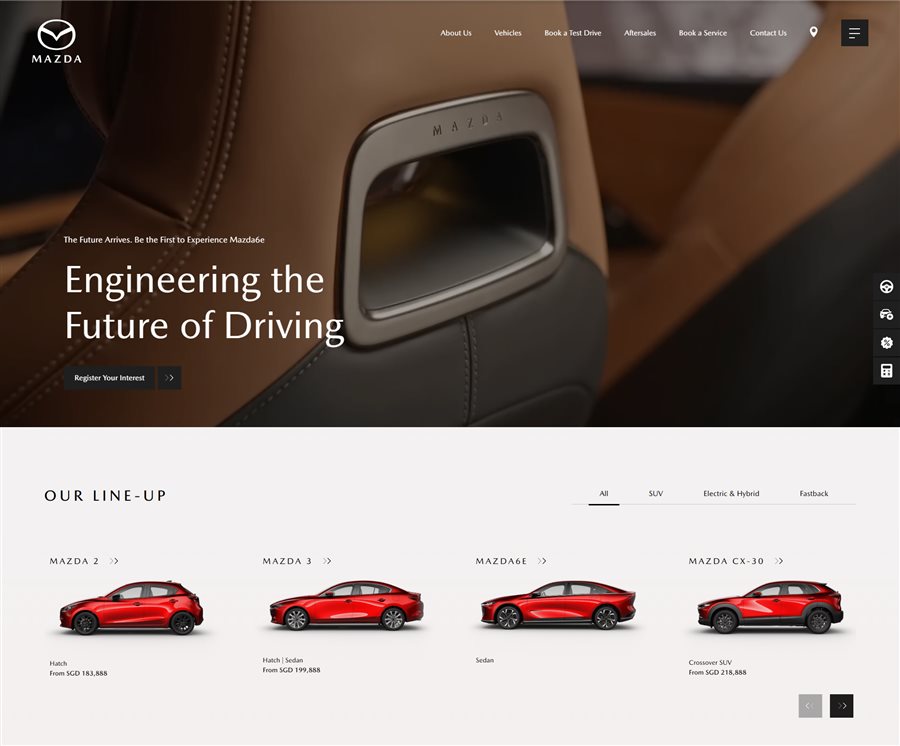
Focused Services Page 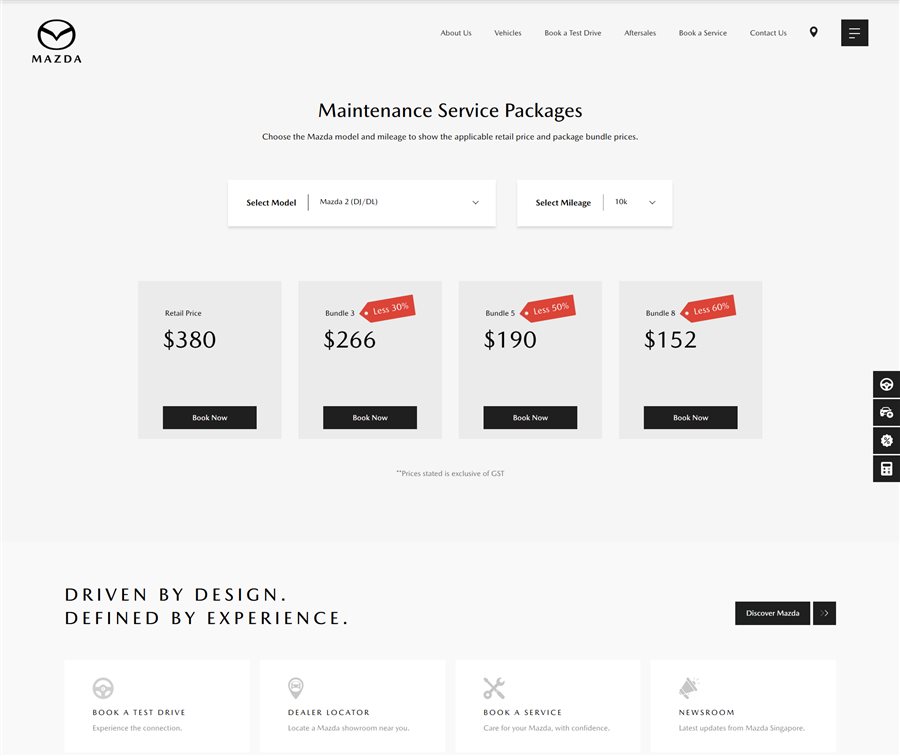
Example of a focused landing page structure: Unlike a general homepage that introduces multiple services and navigation paths, an effective campaign page keeps the visitor focused on a specific message, supporting information and one primary conversion goal.
A common example is a business running a Google Ads campaign for Corporate Website Design. Sending visitors to the homepage requires them to search for the relevant service themselves. A dedicated Landing Page Design, however, immediately presents information about Corporate Website Design, showcases relevant projects, addresses common questions and encourages visitors to request a quotation. This significantly reduces the number of steps required before conversion, making the entire customer journey more efficient.
What Makes a High-Converting Landing Page Design?
Designing a successful landing page is about much more than creating an attractive webpage. While modern layouts, colours and animations certainly help create a positive first impression, they rarely convince visitors to become customers on their own. A high-converting landing page combines strategic messaging, user-focused design, persuasive copywriting and technical optimisation to support lead generation while guiding visitors towards one clear objective. Businesses investing in Website Design Singapore should view every landing page as an extension of their overall digital marketing strategy rather than an isolated campaign asset.
At Elves Lab, we've learnt that increasing traffic is only part of the equation. Businesses may invest heavily in SEO, Google Ads and social media campaigns, but those efforts can still underperform when visitors arrive on a page with unclear messaging, competing actions or insufficient reasons to trust the company. An effective lead generation page removes these barriers by connecting visitor intent with persuasive content, responsive design and a clearly defined conversion path. As part of our Website Design Services , we plan these experiences around both immediate campaign objectives and long-term digital performance.
Rather than overwhelming visitors with unnecessary inflanormation, every section within a Landing Page Design should answer an important question the visitor is already asking. Why should they choose your business? Can they trust your company? What benefits will they receive? How do they get started? By carefully structuring information around these questions, businesses create a smoother customer journey that naturally leads visitors towards making an enquiry.
Below are the essential elements every business should consider when creating a professional Landing Page Design that generates more qualified leads.
8 Essential Elements of a High-Converting Landing Page
A Clear Value Proposition
The first few seconds determine whether visitors continue exploring your Landing Page Design or leave the page. Your value proposition should immediately explain what your business offers, who the service is for and why visitors should choose your company instead of a competitor.
Avoid generic headlines such as "Welcome to Our Website". Instead, communicate a specific benefit that directly addresses the visitor's needs.
A strong value proposition should answer three simple questions:
- What do you offer?
- Who is it for?
- Why should visitors choose you?
Example: Turning a Generic Headline Into a Stronger Value Proposition
Generic: Professional Website Design Services
More focused: Custom Website Design for Singapore Businesses That Want to Generate More Enquiries
The second version immediately communicates the service, target audience and business outcome. The objective isn't to make every headline longer; it's to remove ambiguity. Visitors should understand why the page is relevant to them before deciding whether to continue reading.
Businesses investing in Website Design Singapore should ensure this message appears prominently above the fold, so visitors understand the purpose of the page without scrolling.
Common Mistakes We Frequently See
One issue we regularly encounter when reviewing business websites is a weak or generic value proposition. Headlines such as "Welcome to Our Website" or "Your Trusted Business Partner" may sound professional, but they don't immediately communicate what the business offers or why visitors should continue reading.
A high-converting Landing Page Design should clearly explain the value your business provides within the first few seconds. Visitors shouldn't need to scroll through multiple sections before understanding your products or services.
At Elves Lab, we encourage businesses to focus on customer outcomes rather than company introductions. By highlighting the benefits visitors receive instead of simply describing the business, a Landing Page Design becomes more engaging, more persuasive and significantly more likely to generate enquiries.
Compeling Hero Section:
Landing page hero example: A focused hero section allows visitors to understand the offer quickly while directing attention towards one primary action. Strong visual hierarchy ensures the headline, supporting message and call-to-action work together instead of competing for attention.
The hero section is often the first thing visitors see after clicking an advertisement or search result. A professionally designed hero section combines a strong headline, supporting text, a relevant image and a clear call-to-action that encourages visitors to continue their journey.
At Elves Lab, our Web Design Singapore projects always begin with a simple principle: visitors should understand what a business offers within the first few seconds. Rather than overcrowding the hero section with excessive text or multiple buttons, we focus on one clear message supported by one primary action. Whether the objective is requesting a quotation, booking a consultation or downloading a brochure, every element should encourage visitors to continue their journey with confidence.
One practical technique we frequently use is ensuring visitors can understand the page's purpose within five seconds of arriving. If someone cannot immediately identify what the business offers, who the service is for and how to get started, we simplify the hero section before anything else. Reducing unnecessary elements often improves conversion rates more effectively than adding new design features.
Keep the Hero Section Focused
One of the most common mistakes we notice is businesses trying to communicate too much information inside the hero section. Large paragraphs, multiple buttons and several competing messages often distract visitors from acting.
Instead, a professional Landing Page Design should focus on one clear headline, one concise supporting paragraph and one primary call-to-action. Every additional element should reinforce the visitor's decision rather than compete for their attention.
Our Approach to Landing Page Hero Design
After reviewing and developing websites across different industries, we generally prefer clarity over complexity in the first screen. A landing page doesn't need multiple animations, several competing buttons or a long introduction to appear professional.
If visitors cannot quickly understand what is being offered and what they should do next, adding more visual elements rarely solves the underlying problem. We would usually simplify the message and conversion path first before introducing additional design features.
Persuasive Landing Page Copywriting
Strong landing page copy should answer the questions visitors naturally ask while deciding whether to contact your business. Instead of simply describing what your company provides, explain why those capabilities matter to the customer.
For example, rather than writing:
“We build responsive websites.”
A benefit-focused version could say:
“We build responsive websites that help businesses provide a better mobile experience, strengthen search visibility and turn more visitors into enquiries.”
The difference is intent. The first sentence describes a feature; the second connects that feature to outcomes the customer actually cares about.
When planning conversion-focused content, we recommend structuring the message around four questions:
- What problem does the visitor want to solve?
- How does your service solve that problem?
- Why should they trust your business?
- What should they do next?
This creates a natural progression from visitor need to business solution, evidence and action. Instead of filling the page with promotional claims, effective landing page copy gives visitors enough relevant information to make the next decision confidently.
Landing Page Call-to-Action (CTA) Best Practices
Every Landing Page Design should have one primary objective, and every call-to-action should support that objective.
Visitors should never have to wonder what action to take next.
Examples include:
- Request a Free Quote
- Book a Consultation
- Schedule a Demo
- Contact Our Team
- Download the Brochure
- Get Started Today
Rather than displaying identical buttons throughout the page, we often adapt the wording based on where visitors are in their decision-making journey. For example, visitors near the top of the page may respond better to "View Our Portfolio", while visitors who have already read testimonials or pricing information are often more prepared to click "Request a Free Quotation". Small adjustments like these can improve conversion rates without increasing advertising costs.
Trust Signals
Over the years, we've found that trust is rarely built by a single testimonial or company logo. Instead, visitors gradually build confidence as they move through the page. That's why we strategically position trust signals throughout the customer journey rather than grouping everything together near the footer. Every positive review, completed project, certification and recognisable client reinforces the visitor's confidence before they decide to make contact.
Some of the most effective trust signals include:
- Customer testimonials
- Case studies
- Industry awards
- Professional certifications
- Years of experience
- Portfolio projects
- Recognisable client logos
At Elves Lab, we've found that incorporating trust signals throughout the page is significantly more effective than displaying them only near the footer. To view all our clients, view our portfolio or clientele link.
Real Experience Creates Stronger Trust
Over the years, we've learnt that trust isn't built through claims alone—it comes from demonstrating genuine experience. Visitors are far more likely to submit an enquiry when they can see examples of completed projects, positive client feedback and evidence that your business has successfully delivered similar solutions before.
Throughout our 26 years in the industry, we've had the opportunity to develop websites and digital solutions for organisations across a wide range of sectors, including automotive brands such as Mazda Singapore and MG Singapore, public organisations including the Singapore Kindness Movement, various Town Councils, educational institutions, manufacturers and professional service companies. While every project has different objectives, one principle remains consistent—visitors are far more likely to engage when they immediately recognise credibility through clear messaging, intuitive design and relevant trust signals.
That's why we encourage businesses to showcase completed work wherever possible. If you'd like to see how we've helped companies across different industries improve their online presence, explore our Portfolio, where you'll find examples of professionally designed websites and Landing Page Design projects.
Landing Page Forms: Ask Only for What You Need
One of the most common reasons businesses lose potential enquiries is asking for too much information.
A professional Landing Page Design should only request information that's genuinely required during the initial enquiry.
Instead of creating lengthy forms, consider asking for:
- Name
- Company
- Email Address
- Contact Number
- Brief Project Details
Reducing unnecessary form fields often increases completion rates while making the enquiry process feel less overwhelming. From our experience delivering Website Development Singapore solutions, simplifying enquiry forms is one of the most effective ways to improve lead generation without increasing advertising expenditure.
The ideal form length also depends on the value and complexity of the enquiry. A simple brochure download may only require a name and email address, while a customised website quotation may benefit from additional information about project requirements. The goal isn't always to create the shortest possible form; it's to avoid asking questions that don't help your team qualify or respond to the enquiry.
Mobile First Design
More than half of website visitors now browse using smartphones or tablets. Every Landing Page Design should therefore be developed using a mobile-first approach that prioritises usability across every screen size.
Responsive landing page example: Mobile optimisation involves more than shrinking a desktop layout. Content hierarchy, button sizes, typography, forms, imagery and spacing should be reconsidered for smaller screens so visitors can complete the intended action comfortably on any device.
Visitors should be able to:
- Read content comfortably
- Tap buttons easily
- Complete forms quickly
- Navigate without frustration
Businesses investing in Website Development Singapore should ensure their landing pages perform consistently across desktop computers, tablets and mobile devices.
During our usability reviews, one of the most common issues we encounter is businesses designing their landing pages primarily on desktop computers before checking the mobile version as an afterthought. Since a significant proportion of visitors now browse on smartphones, we recommend designing the mobile experience first and then expanding it for larger screens.
Mobile responsiveness also affects the wider website experience. For a more detailed breakdown of responsive layouts, mobile usability and cross-device optimisation, read our Responsive Web Design Guide.
Fast Loading Speed
Loading speed directly affects both user experience and conversion rates.
Visitors expect webpages to load almost instantly. Every additional second of waiting increases the likelihood that users will abandon the page before engaging with its content.
A professional Landing Page Design should include:
- WebP image optimisation
- Lazy loading
- Compressed CSS and JavaScript
- Browser caching
- Performance optimisation
Besides improving visitor satisfaction, faster landing pages also contribute to better SEO performance and support ongoing conversion optimisation. Businesses investing in Website Development Singapore should treat performance optimisation as an essential part of the development process rather than an optional enhancement.
How to Make a Landing Page SEO-Friendly
An important distinction is that not every paid advertising landing page needs to rank organically. Some campaign pages are intentionally created for short-term promotions or highly specific audiences. However, when a landing page targets an evergreen service or search topic, building it with useful content, crawlable internal links and a clear heading structure can allow the page to support both conversion and long-term organic visibility.
Businesses investing in Website Design Singapore should ensure every landing page includes:
- Optimised H1 heading
- Structured H2 and H3 headings
- Keyword-focused meta title
- Persuasive meta description
- Image alt text
- Internal links
- Schema markup
- Clean URL structure
Although landing pages are commonly associated with paid advertising, they can also become valuable long-term assets for organic search when planned correctly. As part of our Website Design Singapore strategy, we develop campaign pages with structured content, internal linking and technical optimisation so they continue attracting qualified visitors long after an advertising campaign has ended.
7 Types of Landing Pages and When to Use Them
Although the term Landing Page Design is often used broadly, not every landing page serves the same purpose. Different marketing campaigns require different layouts, messaging and conversion goals. Selecting the right type of Landing Page Design ensures visitors receive relevant information that matches their expectations while increasing the likelihood of generating qualified leads.
At Elves Lab, we recommend designing every Landing Page Design around a specific marketing objective instead of trying to make one page serve every audience. A focused approach creates a better user experience, improves conversion rates and allows businesses to measure campaign performance more accurately.
| Landing Page Type |
Primary Purpose |
Ideal For |
| Lead Generation Landing Page |
Collect enquiries |
Professional services |
| PPC Landing Page |
Google Ads conversions |
Paid advertising campaigns |
| Product Landing Page |
Showcase a product |
E-commerce businesses |
| Service Landing Page |
Promote a specific service |
Website Design Singapore companies |
| Event Landing Page |
Event registrations |
Seminars and webinars |
| Download Landing Page |
Collect email leads |
eBooks and brochures |
| Contact Landing Page |
Encourage enquiries |
B2B businesses |
Each Landing Page Design should be customised according to visitor intent rather than using a one-size-fits-all approach. Businesses investing in Website Design Singapore, Web Design Singapore and Website Development Singapore often achieve better results when every campaign has its own dedicated landing page.
Measuring the Success of a Landing Page Design
Some of the most important metrics include:
| KPI |
Why It Matters |
| Conversion Rate |
Measures how many visitors become enquiries |
| Bounce Rate |
Indicates whether visitors leave without engaging |
| Average Time on Page |
Shows whether visitors are reading your content |
| Form Submission Rate |
Measures lead generation performance |
| Click-Through Rate (CTR) |
Evaluates call-to-action effectiveness |
At Elves Lab, we rarely judge a landing page based solely on conversion rate. We also evaluate lead quality. A page generating fewer enquiries but attracting higher-value customers often delivers significantly better long-term business results than one producing many low-quality leads.
Conversion Rate Isn't the Only Number That Matters
Imagine Landing Page A generates 50 enquiries but only two become suitable sales opportunities, while Landing Page B generates 25 enquiries and 10 become qualified opportunities. Looking only at form submissions would make Page A appear more successful, even though Page B may deliver substantially greater business value.
For B2B and higher-value services especially, landing page optimisation should consider both the quantity and quality of leads generated. Connecting website analytics with enquiry outcomes can provide a more meaningful picture of campaign performance than measuring clicks or submissions alone.
Common Landing Page Design Mistakes to Avoid
Even experienced businesses sometimes make mistakes that reduce the effectiveness of an otherwise well-designed Landing Page Design. Understanding these common issues allows businesses to improve user experience while increasing lead generation opportunities.
| Mistake |
Why It Reduces Conversions |
| Multiple call-to-actions |
Creates confusion |
| Slow loading speed |
Higher bounce rate |
| Long enquiry forms |
Lower form completion rate |
| Generic stock images |
Reduces credibility |
| No testimonials |
Lower customer confidence |
| Poor mobile responsiveness |
Frustrates mobile users |
| Weak value proposition |
Visitors leave before engaging |
At Elves Lab, every Landing Page Design undergoes careful planning and review to minimise these issues before launch, ensuring visitors enjoy a smooth and conversion-focused experience.
The Mistake We See Most Often
If we had to choose one problem that appears most frequently, it would be trying to make a landing page perform too many jobs at once. A page may begin as a Google Ads destination, then gradually accumulate additional services, announcements, navigation links and secondary calls-to-action.
Eventually, the original conversion goal becomes difficult to identify.
Before adding another section or button, ask one question: does this help the visitor make the intended decision? If the answer is no, that element may belong elsewhere on the website.
Before and After Implementing a Professional Landing Page Design
Many businesses already have a website but continue directing advertising traffic to their homepage. A professionally developed Landing Page Design creates a more focused experience by matching visitor intent with campaign-specific messaging.
| Without Landing Page Design |
With Landing Page Design |
| Homepage used for every campaign |
Dedicated page for each campaign |
| Multiple navigation options |
Single conversion goal |
| Generic messaging |
Targeted content |
| Lower conversion rates |
Higher lead generation |
| Difficult to measure campaign ROI |
Clear conversion tracking |
| Higher bounce rates |
Better visitor engagement |
For businesses investing in Website Design Singapore, implementing a dedicated Landing Page Design often improves both marketing performance and overall return on investment. By aligning campaign messaging with visitor intent, reducing unnecessary distractions and providing a clear path towards conversion, businesses can generate more qualified enquiries while making better use of their advertising budget. Over time, this focused approach also provides valuable insights that support continuous optimisation and long-term digital marketing success.
High-Converting Landing Page Design Checklist
| Essential Element |
Why It Matters |
Business Impact |
| Clear Value Proposition |
Explains the offer immediately |
Reduces bounce rates |
| Hero Section |
Captures attention above the fold |
Increases engagement |
| Persuasive Copywriting |
Focuses on customer benefits |
Generates more enquiries |
| Strong Call-To-Action |
Guides visitors towards one objective |
Higher conversion rates |
| Trust Signals |
Builds credibility and confidence |
Improves enquiry quality |
| Lead Capture Form |
Makes contacting your business simple |
More qualified leads |
| Mobile-First Design |
Delivers a better experience across devices |
Higher mobile conversions |
| Fast Loading Speed |
Prevents visitors from leaving early |
Better SEO and lower bounce rates |
| SEO-Friendly Structure |
Supports long-term organic visibility |
Sustainable lead generation |
What 26 Years of Web Design Has Taught Us About Landing Pages
Every business, audience and marketing campaign is different, but after more than 26 years of designing websites and digital experiences, several patterns continue to appear.
Clarity usually beats complexity. Businesses often try to explain everything on one page. The strongest campaign experiences tend to prioritise the information visitors actually need to make their next decision.
More choices don't always create better experiences. Additional menu items, buttons and promotional messages can make a page feel comprehensive while unintentionally distracting visitors from its primary objective.
Forms should match the enquiry. We frequently encounter forms requesting information that isn't necessary during the first interaction. Removing unnecessary fields can make contacting a business feel significantly easier.
Small changes can create meaningful improvements. A landing page doesn't always need a complete redesign. Clearer headlines, better content hierarchy, stronger trust signals and a simpler enquiry process can sometimes address the biggest conversion barriers.
Trust should appear throughout the journey. Testimonials, client examples, experience and relevant credentials are more effective when they support important decision points rather than being confined to one section near the bottom of the page.
Across projects involving automotive brands, public organisations, SMEs, healthcare providers and professional services, the principle we return to is simple: **every element should have a reason to be on the page. If it doesn't help visitors understand the offer, trust the business or take the intended action, we reconsider whether it belongs there.
Frequently Asked Questions
What is a Landing Page?
A landing page is a dedicated webpage designed to encourage visitors to complete a specific action, such as requesting a quotation, booking a consultation or submitting an enquiry. Unlike a homepage, it focuses on one marketing objective.
Why is Landing Page important?
A professional Landing Page Design helps businesses improve lead generation by reducing distractions, strengthening trust and guiding visitors towards one clear call-to-action.
Does Landing Page Design improve SEO?
Yes. A properly structured Landing Page Design with optimised headings, metadata, internal links and valuable content can improve organic visibility while supporting lead generation.
Is Landing Page Design suitable for Google Ads?
Absolutely. Google Ads campaigns generally perform better when advertisements direct visitors to a dedicated Landing Page Design rather than a generic homepage.
How long should a Landing Page Design be?
There is no fixed length. A successful Landing Page Design should contain enough information to answer visitor questions, build trust and encourage conversions without overwhelming users.
What is the difference between a homepage and a Landing Page?
A homepage introduces an entire business, while a Landing Page focuses on one campaign, one audience and one conversion goal.
Should every Landing Page Design be mobile responsive?
Yes. Every Landing Page Design should provide a seamless experience across desktops, tablets and smartphones to maximise user experience and conversion opportunities.
How much does a Landing Page Design cost?
The cost depends on project scope, functionality and business requirements. At Elves Lab, we recommend discussing your objectives before selecting the most suitable solution.
How do I choose the right Website Design Singapore company?
Look for an agency with proven experience, a strong portfolio, technical expertise, transparent communication and a structured approach to creating Landing Page Design solutions that support long-term business growth.
Conclusion
Over the past 26 years, we've helped organisations ranging from SMEs and local businesses to recognised brands such as Mazda Singapore, MG Singapore and the Singapore Kindness Movement strengthen their digital presence through strategic website design and development. Every project reinforces the same lesson: successful landing pages aren't created by following trends; they're created by understanding your audience, removing unnecessary friction and guiding visitors towards one meaningful action.
Call-To-Action
Looking to create a professional Landing Page Design that generates more qualified leads and supports your business growth? Contact Us today or explore our Website Design Packages to discover how Elves Lab can help bring your vision to life.